Accessories & Recovery We Install for the Jeep Platform
Every Jeep gets built for the terrain and the trip. We stock and install four core categories — each sourced from brands the Jeep community actually trusts, installed to a standard that survives what solid axle rigs get themselves into.
Winches & Recovery Gear
A Jeep without a winch on a real trail is a phone call waiting to happen. The solid axle setup articulates where trucks can't — and puts you in positions trucks can't easily pull you out of. We spec WARN, Mile Marker, and Smittybilt winches to your specific bumper mount and Jeep GVW, wired correctly with a proper battery-level fuse and weatherproof solenoid relocation. How to actually use it on the trail is covered in our Before You Wheel guide.
- 9,500–12,000 lb winches sized for JK, JL & Gladiator GVW
- Synthetic line standard — safer in the field, lighter on the bumper
- WARN VR EVO and ZEON series stocked
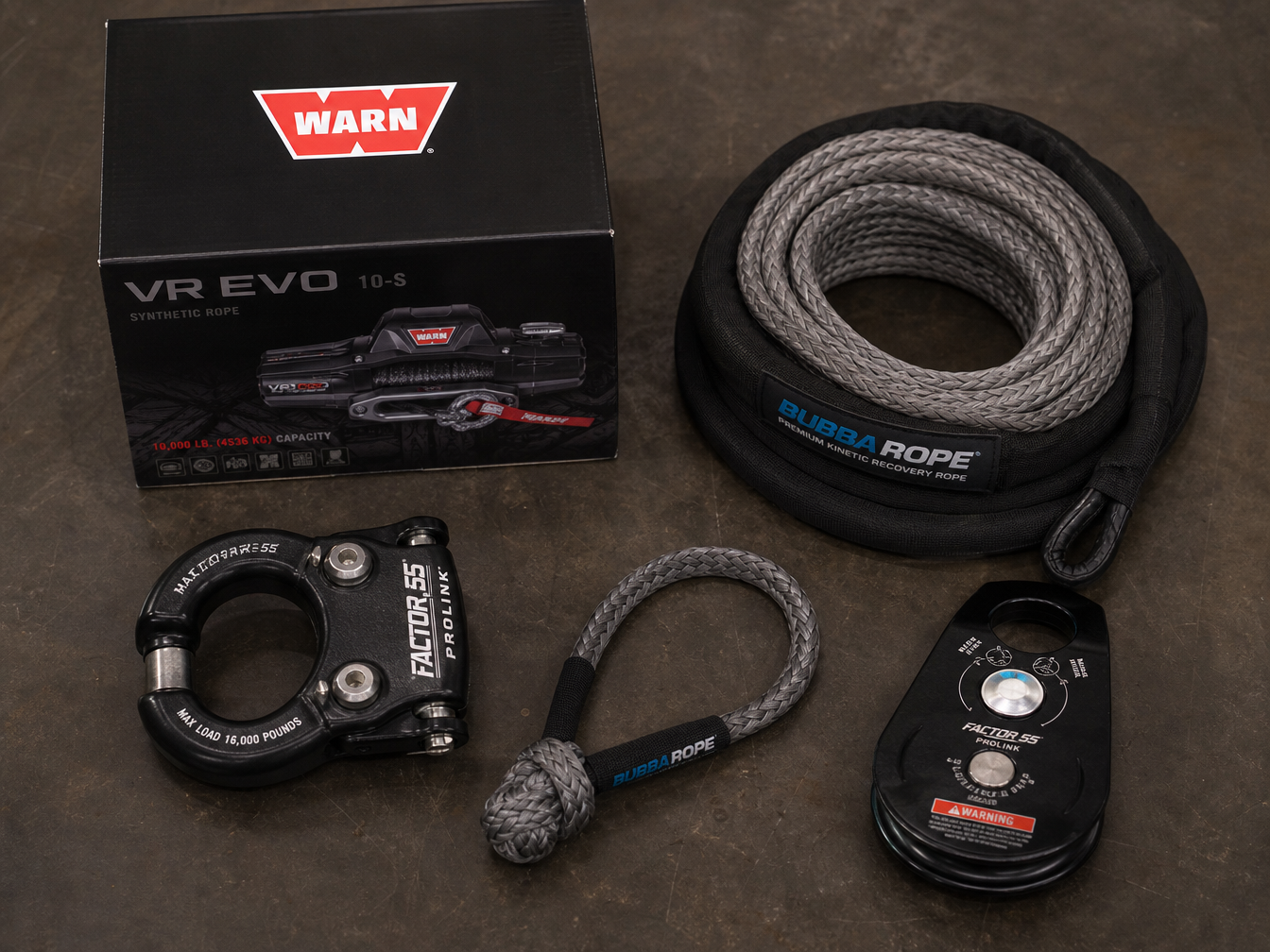
- Factor 55 Flatlinks and ProLinks — replaces stock hooks
- Full recovery kit: kinetic rope, soft shackles, snatch block
- Solenoid relocation and wiring to factory spec
Skid Plates & Underbody Armor
The JL comes with factory skid coverage — but it's not trail coverage. Rock sliders are critical on a Jeep because the short wheelbase and solid axle articulation put your rockers in direct contact with terrain that would miss a truck entirely. JK and JL mounting points are completely different — we don't install universal skids on platform-specific frames.
- Engine, oil pan, transmission, and transfer case skids
- JL-specific and JK-specific fitment — not bolt-on universal
- Rock sliders: weld-on or bolt-on, steel or aluminum
- Dana 30, 44, and 60 differential cover upgrades
- Control arm skid options for lifted builds
- Full service access preserved on every install
Bumpers, Sliders & Armor
Jeep bumpers aren't truck bumpers — the geometry is part of the capability spec. A wrong bumper destroys your approach angle, buries your sensors, and adds weight your solid front axle wasn't designed to carry. We install tube bumpers and full-steel options for JK, JL, and Gladiator — front and rear — matched to your winch, your recovery hardware, and your actual trail priorities.
- Tube bumpers, stubby, and full-width front options
- Rear bumpers with swing-out and spare tire carrier
- Integrated winch mount and LED light tabs
- Welded D-ring tabs — load-rated, never bolt-on face plate
- Rock sliders: striker, tube, and plated options per use
- Raw steel, bedliner, or powder coat finish
Roof Racks & Overland Platforms
Hard top and soft top Jeeps mount racks completely differently — and most shops don't know the difference until it rattles loose at 75 mph. Factory JL hard tops have reinforced mounting points for proper platform loads. Soft top installs require a different approach entirely. We install both, document the load rating, and don't clamp to plastic gutter trim.
- Hard top platform racks for JL and JK (Garvin, Gobi, Mule)
- Soft top crossbar systems — proper factory mount only
- Gladiator bed racks with RTT mounts and awning arms
- MOLLE panels and gear-track expansion rails
- Awning bracket systems for JL/JK utility track slots
- Weight-rated for RTTs to documented load spec
Accessories & Recovery Pricing Tiers
Transparent pricing, no surprises. Every install includes test-fit, torque verification, load-path inspection, and a post-install function check. Parts and labor included in ranges shown.
Recovery Kit Starter
- Kinetic recovery rope + soft shackles
- 2-pack recovery boards with bed mount
- Tree saver strap and snatch block
- Factor 55 rated hardware or equivalent
- Storage bag and organized mount bracket
Winch + Bumper Combo
- 9,500–12,000 lb WARN winch, synthetic line
- Steel front bumper — stubby or tube, your spec
- Solenoid relocation and proper-gauge wiring
- Hawse fairlead and in-cab wireless controller
- Load-tested at our bench before delivery
Full Underbody Protection
- Engine, trans, t-case, and tank skids
- Rock sliders: weld-on or bolt-on option
- Dana diff covers front and rear
- Control arm skids for lifted builds
- Service access drains preserved — all of them
- Aluminum or steel, your choice
Overland Platform Package
- Roof rack or bed rack per trim and top
- RTT mount — rated for your specific tent weight
- 270° awning brackets and Maxtrax/board holders
- 12V auxiliary power distribution at the platform
- Full recovery kit integration
Pricing varies by vehicle, brand tier, and fabrication scope. Final quote after free in-shop consult.
Jeep Accessories & Recovery Builds Off Our Bench
Every build is different. Here's a sample of recent installs — each one test-fitted, load-rated, and road-tested before delivery.
2022 Jeep Wrangler JL Rubicon
JL Rubicon built for East Texas trail running. WARN 10S sized correctly for the JL's GVW, mounted to a tube bumper test-fitted before final torque, with the solenoid relocated and the entire harness fused at the battery. Customer's been to Barnwell Mountain twice since the build. Zero issues.
2019 Jeep Wrangler JK Unlimited
JK Unlimited that had already lost its transfer case skid to a rock. Full belly armor in JK-specific fitment — engine, trans, t-case, and tank — with weld-on rock sliders tied to the frame and Dana diff covers front and rear. Every drain access point preserved. Customer runs Sam Rayburn and Big Creek monthly.
2022 Jeep Gladiator Mojave
Gladiator Mojave built out for a two-week Big Bend run. Gobi bed rack tied to the frame — not clamped to plastic bed rails — with a 270° awning, two Maxtrax bracket mounts, and jerry can holders with real load ratings. Customer completed the trip and sent pictures from the Chisos Basin.
Why Accessories & Recovery Gear Matter More on a Jeep
A stock Wrangler can handle the commute. It cannot always handle what Jeep owners actually take it into. Here's why the right gear matters for the way Jeep owners in Texas actually drive.
East Texas Clay & River Bottom Trails
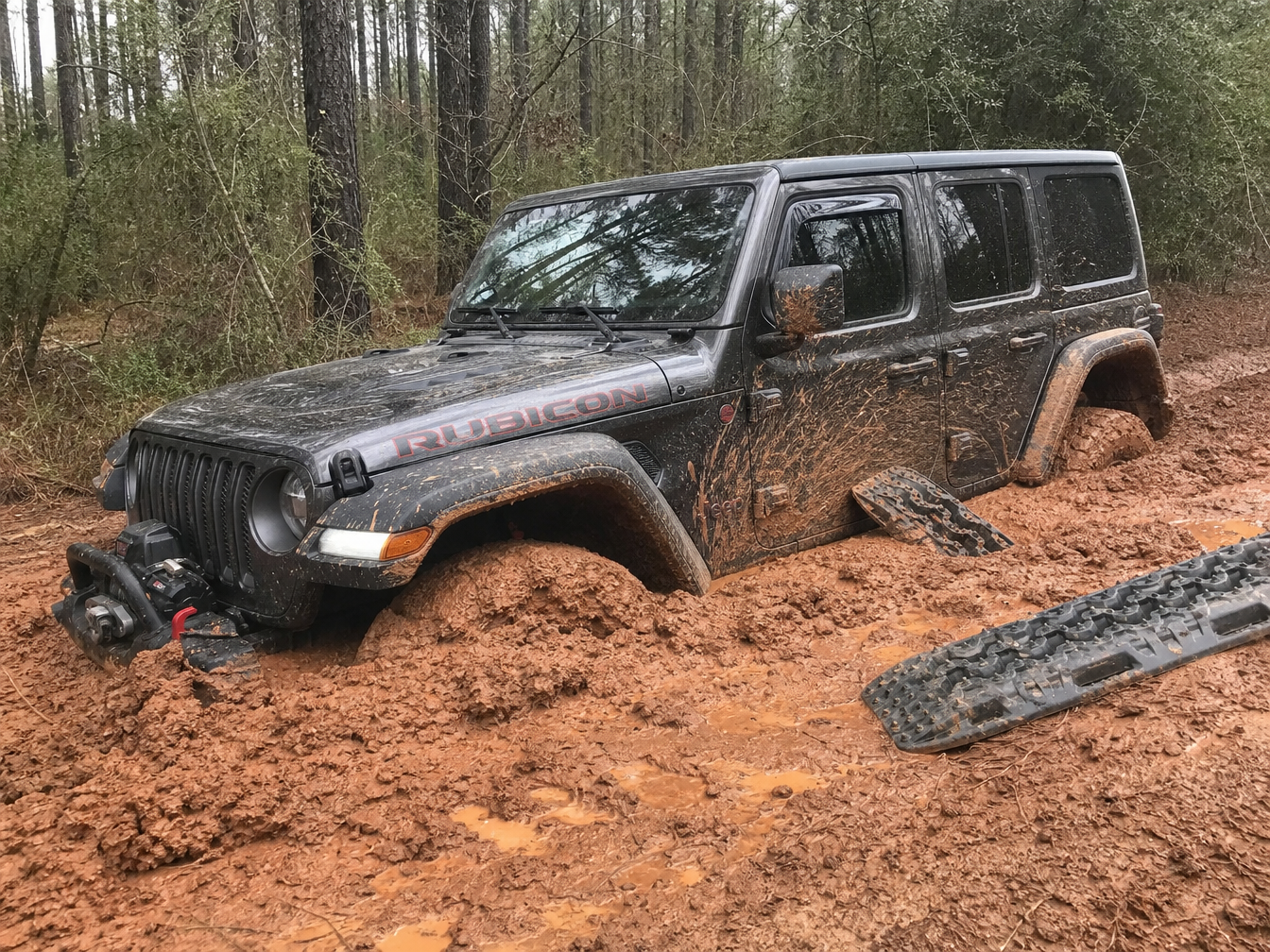
Barnwell Mountain, River Run, Big Creek. The trails we send Houston Jeep owners to are red clay, river crossings, and soft bottom — the kind of terrain that grabs solid axle rigs and holds them. A winch, synthetic line, and a kinetic rope in the bed is not optional for solo trail running in East Texas. We've built recovery setups specifically for the mud-pull scenario — longer synthetic line, double fairlead blocks, and proper rigging points.
Hill Country Technical Terrain
Rocky Hill Ranch, Lost Creek, Flat Rock. The Hill Country adds a different challenge — ledge drops, limestone shelves, and body contact terrain that puts your rock sliders and skid plates to work. The short wheelbase on a Wrangler makes it highly capable here, but it also means the rockers are constantly in play. A proper slider setup — tied to the frame, not to the body — is the difference between a rock garden story and a body panel replacement.
West Texas Remote Trail Running
Big Bend, Guadalupe Mountains, the Trans-Pecos backcountry. Recovery on a remote trail in West Texas isn't a minor inconvenience — the distances from help are real. Every Jeep we build for long-range runs gets a recovery kit scaled to the scenario: kinetic rope for self-recovery, soft shackles rated above vehicle weight, and a mounting solution that keeps every piece accessible when the adrenaline is up.
Houston Flood Recovery
Houston floods. Every Jeep owner already knows it. A winch mounted correctly and rated recovery points in the bumper converts a flood street situation from a tow truck call into a twenty-minute self-recovery — or a neighbor you stop to help. We spec winch capacity to your specific GVW, not the lowest weight class that fits the bumper opening.
How to Choose the Right Gear for Your Wrangler or Gladiator
The right winch, bumper, or skid plate depends on how you actually use the Jeep. Here's how we help Wrangler and Gladiator owners decide — and why the in-person consult is where the real spec work happens.
Winch Pull Rating: Size It for a Jeep
The standard rule is 1.5× GVW. A JL Wrangler Sport runs about 4,400 lbs curb — you need 6,500+ lbs minimum. A loaded Gladiator with gear and passengers is pushing 6,000 lbs — 9,500 lb minimum. JK Unlimited four-doors are heavier than most owners realize. We'll do the math with you at the consult, not guess from a catalog.
Rock Slider Types: Weld-On vs. Bolt-On for Jeep
Weld-on sliders tie directly to the frame and handle repeated rock contact without bending. Bolt-on sliders use factory or drilled frame holes and are removable — better for customers who daily drive and want to pull them for pavement events. For customers who wheel hard, weld-on is the honest recommendation. We do both, correctly, to JK and JL geometry.
Bumper vs. Approach Angle: The Trade-Off
The JL Wrangler Rubicon has a 42° factory approach angle — one of the best of any production vehicle. The wrong bumper drops that angle and adds unsprung weight to a solid axle already working hard. We fit bumpers to your trim, your lift height, and your actual use case. A daily driver JL Sport in Houston gets a different recommendation than a trail-focused Rubicon headed to Big Bend.
Hard Top vs. Soft Top Rack Decisions
A JL hard top has reinforced mounting points designed for platform racks up to spec. A JL soft top has fabric and a bow — you can't mount a full rack to it the same way, and most cheap crossbar systems are not rated for RTT loads. If you run a soft top, we'll tell you exactly what platform options exist and what the actual load limits are before you buy the tent.
What Actually Goes Into a Proper Jeep Install
Every recovery gear installation we do is test-fitted before final torque and load-path verified before it leaves our bay. Here's what that means on a Jeep specifically.
Winch Mount & Wiring on a Jeep
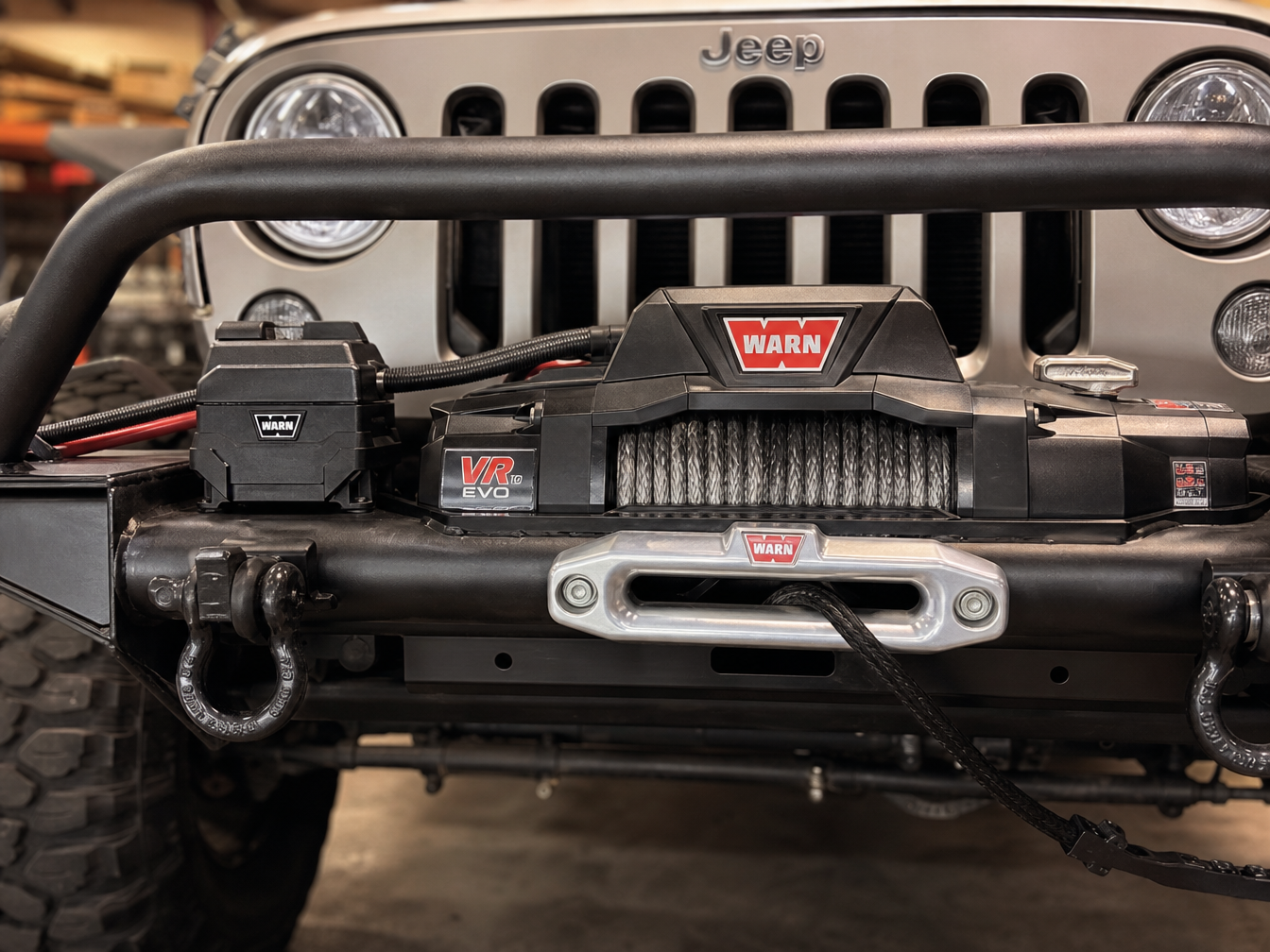
Jeep bumpers mount to specific frame horn locations — different on JK vs JL vs Gladiator. Winch power cables run in proper gauge (2/0 for 9,500+ lb pulls), protected where they pass through the firewall, and fused within inches of the battery. Solenoid boxes relocated when needed — some JL bumper/winch combos put the solenoid in a position that traps heat. We think about airflow, not just whether it bolts on.
Recovery Point Load Paths on a Jeep Frame
A D-ring bolted to a bumper face plate on a Jeep transfers shock load to four bolts in shear, not to the frame. Real recovery points are welded to structural frame members or to bumper mounting structures that tie back to the frame, then gusseted, and rated in the direction of pull. We document the rating on every recovery point we install.
Skid Plate Fitment: JK vs. JL Differences
The JL Wrangler changed nearly every factory skid mounting point from the JK. Universal skid kits that claim JK/JL compatibility are almost always compromising fitment on one or both platforms. We install platform-specific skids and dry-fit every plate before final torque to confirm drain access and articulation clearance under a fully cycled suspension.
Roof & Bed Rack Load Paths on a Jeep
JL factory hard tops have documented load ratings at reinforced mounting points — we work within those ratings, not around them. Gladiator bed racks bolt to the frame or reinforced bed structure, not to plastic bed rails. Every rack install includes a documented static and dynamic load rating and a walk-through of what the platform can actually carry at speed.
Common Jeep Accessory Install Mistakes We Fix Every Week
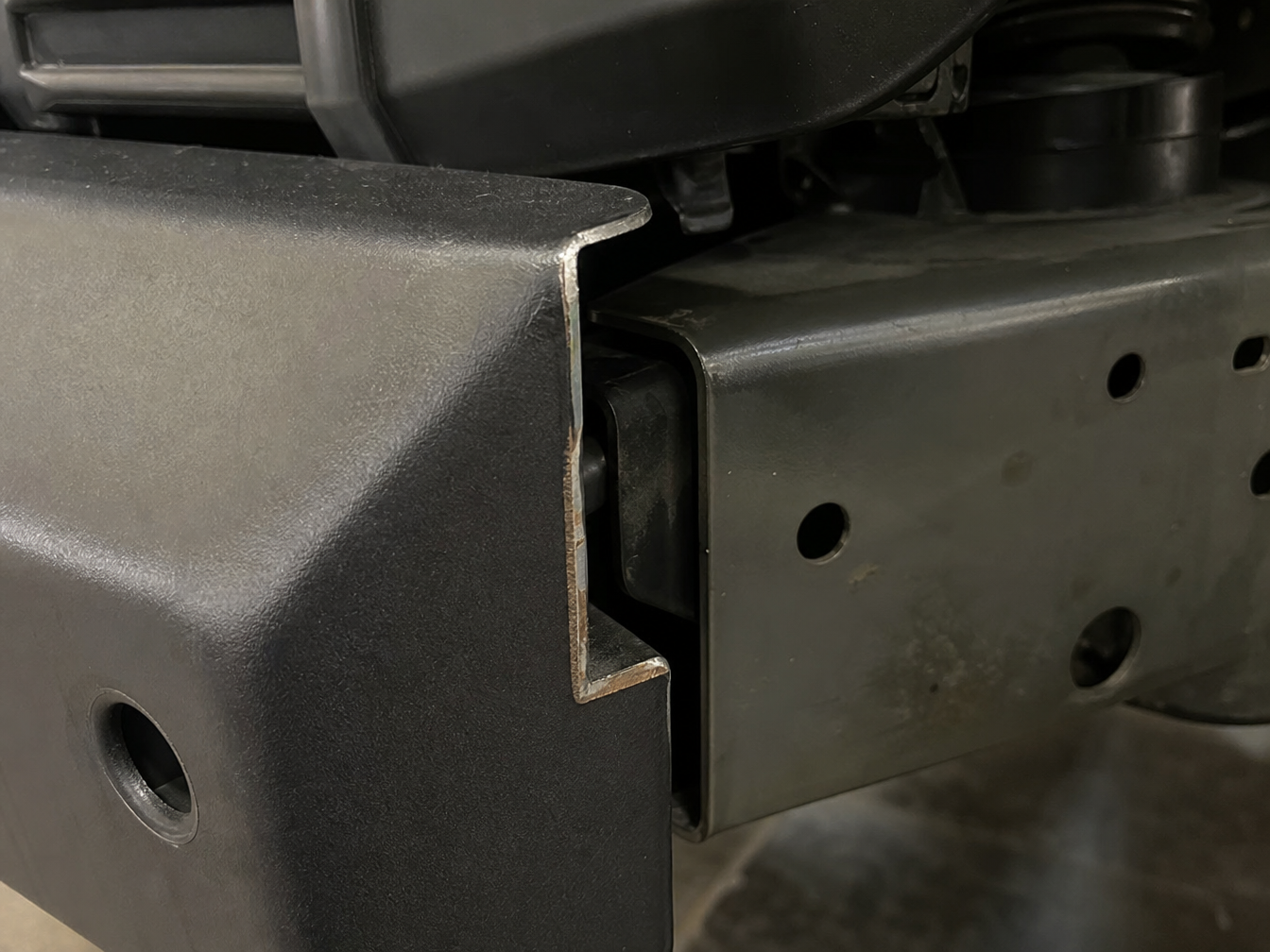
We see the same errors from DIY installs and shops that don't know the Jeep platform. Here's what to watch for — and what we do differently.
Universal Skid Plates on Platform-Specific Frames
JK and JL mounting points are completely different. A "fits all Wranglers" skid plate is engineering fiction — it's either cutting corners on the JK fit, the JL fit, or both. The result is a skid that looks installed but can shift under load, block drain access, or bind against the frame under articulation. We only install platform-specific skids.
Bumpers That Kill the Approach Angle
The Wrangler's approach angle is a capability specification, not an aesthetic detail. Full-width bumpers that hang below the factory skid line reduce approach angle significantly — on a 3.5" lifted JL, the wrong bumper can undo most of what the suspension added. We measure your specific trim's approach geometry and fit bumpers accordingly.
Soft Top Rack Installs on Plastic Gutter Trim
Tower-clamp roof racks rated at 150 lbs dynamic on a Jeep soft top carrying a 200 lb RTT. They vibrate, they creak, they eventually pull through the plastic trim or strip the factory channels. We don't install soft top racks to gutter trim. If the mounting structure can't hold the load you're putting on it, we tell you before you buy the tent.
Recovery Points Welded to Jeep Body Panels
We occasionally get Jeeps in where someone has welded a D-ring tab to the body tub or to a bumper skin with no frame tie-in. Under a hard shock pull, this tears out — and anything attached to the recovery rope becomes a projectile. Real recovery points on a Jeep tie to the frame. We verify every point can take 2× vehicle weight in a shock load direction before it's rated.
Our Jeep Accessories & Recovery Install Process
We don't bolt on parts and hand you the keys. Every build follows five steps — fit, weld, wire, load-test, and verify — so what leaves our shop actually works when you need it on the trail.
Come In & Consult
Bring the Jeep. We review your trim, mods, terrain, and priorities. No appointment needed — no charge. Most customers walk out with a spec sheet the same day.
Test-Fit & Fabricate
Every bumper, skid, and rack dry-fit before final install. Fabrication done in-house where needed — welded to frame structure, not to body panels or sheet metal.
Wire & Mount
Winch power runs in correct gauge, fused at the battery, protected at every pass-through. Controller sockets sealed. Every bolt torqued to spec and documented.
Load-Test & Rate
Recovery points shock-load tested. Winches run through a full spool under load. Roof and bed racks verified at rated dynamic load. Every system rated before keys leave our shop.
Walk-Through & Deliver
Full walk-through of every feature, connection point, and service-access consideration. Documentation folder, warranty card, and 30-day follow-up check.
What Jeep Owners Are Saying
Reviews verified on Google. Names shortened for privacy.
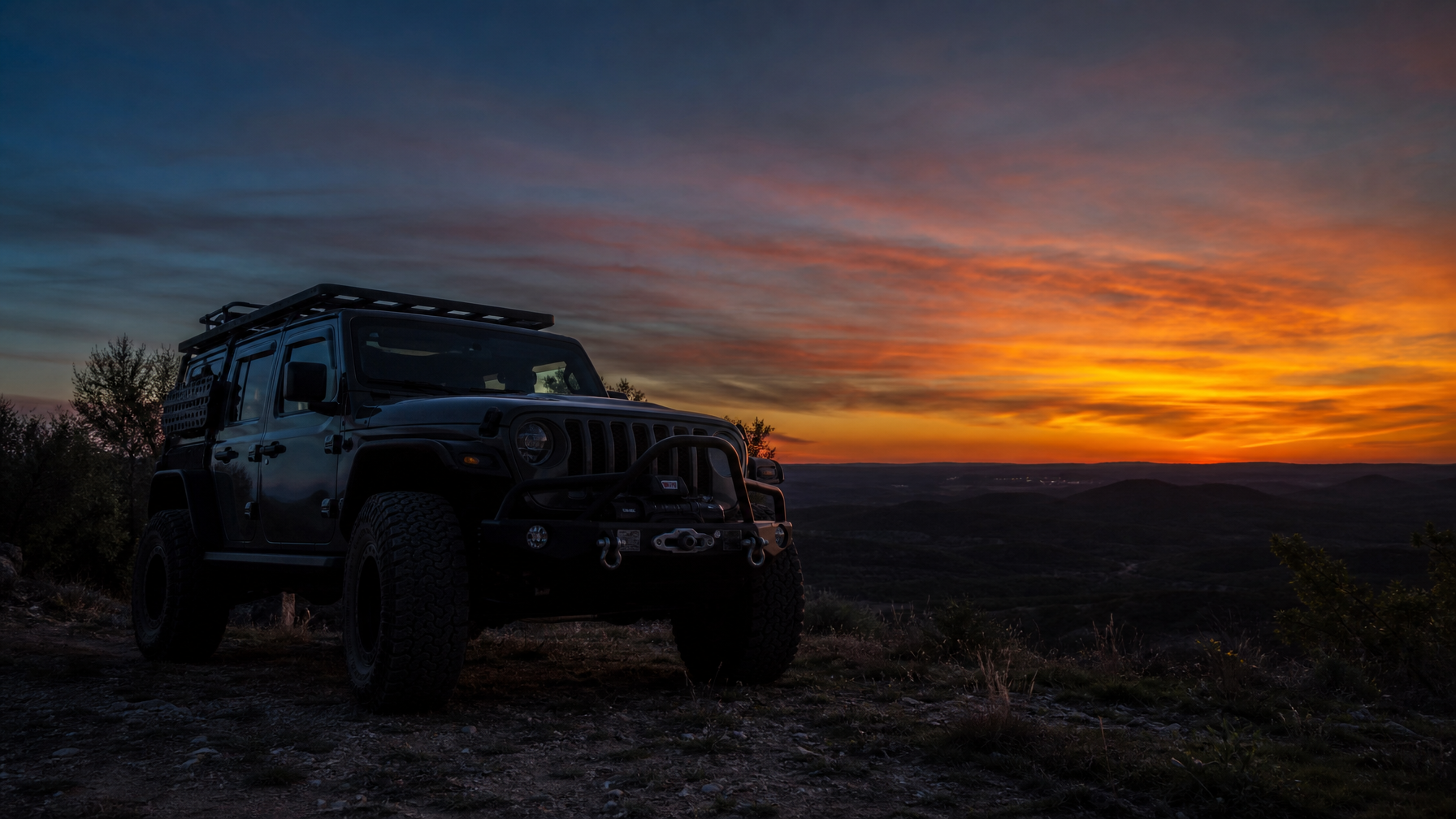
"WARN 10S and a tube front bumper on my JL Sport — Summit Jeep Works sized it to my exact GVW and wired it correctly the first time. Three months later I was at Barnwell Mountain, hung up in clay up past my axles, and pulled myself out in four minutes flat. The winch worked exactly like it was supposed to because it was installed exactly like it was supposed to be."
"Full belly armor on my JK Unlimited. Two things sold me — they knew the JK mounting points before I finished explaining what I wanted, and they showed me how to access every drain plug before the skids were even torqued down. First shop in four visits that actually knew the platform. Transfer case has been on Rocky Hill Ranch three times since. Not a scratch."
"Gladiator overland platform — bed rack, 270° awning, recovery kit. What made me trust them was the load rating documentation at delivery. Every mount was engineered to the frame. Drove to Big Bend fully loaded — tent, gear, fuel cans — and nothing moved. That's what a proper install looks like."
Jeep Accessories & Recovery Questions, Answered
Jeep Accessories & Recovery Installs Across Greater Houston
Jeep owners drive from across the Houston metro — and beyond — because getting it built right matters more than building it close. If you're within reasonable driving distance, bring us the Jeep.
Houston, TX 77057
Sat 9am–4pm