Jeep Gladiator JT
Builds in Houston, TX
The Gladiator is the Wrangler with a truck bed. That sounds simple — but the wheelbase, payload, ADAS, and drivetrain considerations make it a completely different build conversation from the JL. We've had that conversation enough times to know the difference.
Summit Jeep Works builds Jeep Gladiator JT — Sport, Overland, Mojave, and Rubicon — from Stage 1 daily driver lifts to Stage 3 overland and trail rigs. ADAS recalibration included on every geometry change. No geometry shortcuts. No compromises on the driveshaft.
No appointment needed for walk-in consultations · 6420 Westheimer Rd, Houston TX
What the Gladiator JT Actually Is
The Gladiator JT debuted as a 2020 model. It shares the JL Wrangler's front half — same 3.6L Pentastar engine, same axle architecture on comparable trims, same ADAS suite — but the 19.4-inch wheelbase stretch to 137.3 inches changes how it handles, what it can tow, and how every suspension modification works. It is not a JL with a bed bolted on. It is a different vehicle that shares a significant amount of DNA with the JL.
| Spec | Rubicon | Mojave |
|---|---|---|
| Front Axle | Dana 44 AdvanTEK Wide-Track (68" WMS) | Dana 44 HD Wide-Track (68" WMS) |
| Rear Axle | Dana 44 AdvanTEK Wide-Track | Dana 44 HD Wide-Track |
| Axle Tube Thickness | 10mm (thick) | 10mm (thick) |
| Gear Ratio | 4.10:1 standard (3.73 optional) | 4.10:1 fixed |
| Front Locker | Tru-Lok electric | Open diff |
| Rear Locker | Tru-Lok electric | Tru-Lok electric |
| Transfer Case | Rock-Trac NP241OR (4:1) | Command-Trac NP231 (2.72:1) |
| Sway Bar Disconnect | Electronic front disconnect | Standard sway bar |
| Shocks | Bilstein mono-tube | Fox 2.5" internal bypass w/ reservoirs |
| Ground Clearance | 11.1" | 11.6" |
| Max Tow | 7,000 lbs | 7,000 lbs |
| Max Payload | 1,200 lbs (Rubicon) — lowest trim | 1,360 lbs |
| Spec | Sport / Sport S / Overland |
|---|---|
| Front Axle | Dana 44 Standard (narrow-track or wide-track depending on options) |
| Rear Axle | Dana 44 Standard |
| Gear Ratio | 3.73:1 (gasoline) — regear recommended at 35"+ |
| Front Locker | None — open diff standard |
| Rear Locker | None — open diff standard |
| Transfer Case | Command-Trac NP231 (2.72:1 low range) |
| Max Tow | Up to 7,700 lbs (Sport S Max Tow package) |
| Max Payload | Up to 1,725 lbs (Sport S Max Tow) |
| ADAS Systems | Forward collision, blind spot, rear cross-path — recalibration required on lift |
Note on the Mojave: The Mojave is the desert-speed truck — Fox 2.5" bypass shocks, wider axle stance, standard 4.10 gears, and a 1" factory higher ride height for high-speed terrain clearance. It has a rear locker but no front locker, which is the opposite priority from the Rubicon. For trail/rock work, the Rubicon's Rock-Trac 4:1 and front locker are meaningfully better. For fast fire roads, washboard terrain, and Texas sand — the Mojave's Fox Live Valve shocks are a legitimate advantage.
Gladiator JT: 6 Failure Points to Address
The Gladiator is a strong platform. But the longer wheelbase, heavier curb weight, and ADAS systems introduce specific issues that show up after lift installs. These are the six we see most often.
Which Trim to Buy — and What to Fix First
Every JT trim has a different starting point for a build. Here's what each one brings to the table and what we address immediately.
Factory Rock-Trac 4:1 transfer case, Tru-Lok front and rear lockers, Dana 44 wide-track axles with 4.10 gears, 33" Goodyear MT tires from the factory, electronic sway bar disconnect, and Bilstein monotube shocks. The Rubicon is the strongest starting point for trail and rock work — but its payload rating of approximately 1,200 lbs is the lowest of any JT variant. If you're building an overland rig that will carry serious gear weight, factor that in early.
First steps after purchase: Lift to 2.5"–3.5" with ADAS recal, move from factory 33" tires to 35"+ at current gearing (4.10 works at 35"), armor package, and winch. Regear to 4.56 when moving to 37"+.
The Mojave gets the Fox 2.5" internal bypass shocks with external reservoirs — the best factory suspension package available on any JT — plus Dana 44 HD wide-track axles, 4.10 fixed gearing, and a Tru-Lok rear locker. No front locker. The Mojave's 1" higher ride height and Fox shocks make it the platform for fast desert and washboard terrain. If you're building a trail and rock rig, the Rubicon's Rock-Trac and front locker are more useful. If you're building an overland/desert truck that sees fast terrain, the Mojave is the more honest starting point.
First steps: Leveling or 2.5" lift with ADAS recal, 35" tires (4.10 gears accommodate 35" well), armor and winch, add front ARB locker if rock capability is part of the plan.
Sport S and Overland trims come with standard-width Dana 44 axles and 3.73 gears — the starting point that needs the most corrective work for a proper build. The good news: Dana 44 axles are still Dana 44s and the platform is solid. The regear to 4.56 is the single highest-priority first modification on any non-Rubicon JT build running 35" tires. At 37"+, 4.88:1 is the correct call. Sport S with the Max Tow package gets the highest payload rating (up to 1,725 lbs) and wide-track axles, which makes it the value overland platform if you can live without the factory lockers.
First steps: Regear to 4.56 (35") or 4.88 (37"+), lift with ADAS recal, ARB lockers front and rear, armor and winch. Budget accordingly — a fully built Sport S with regear, lockers, and lift runs close to a Rubicon build total, but starts cheaper.
Tire Sizes for the Gladiator JT
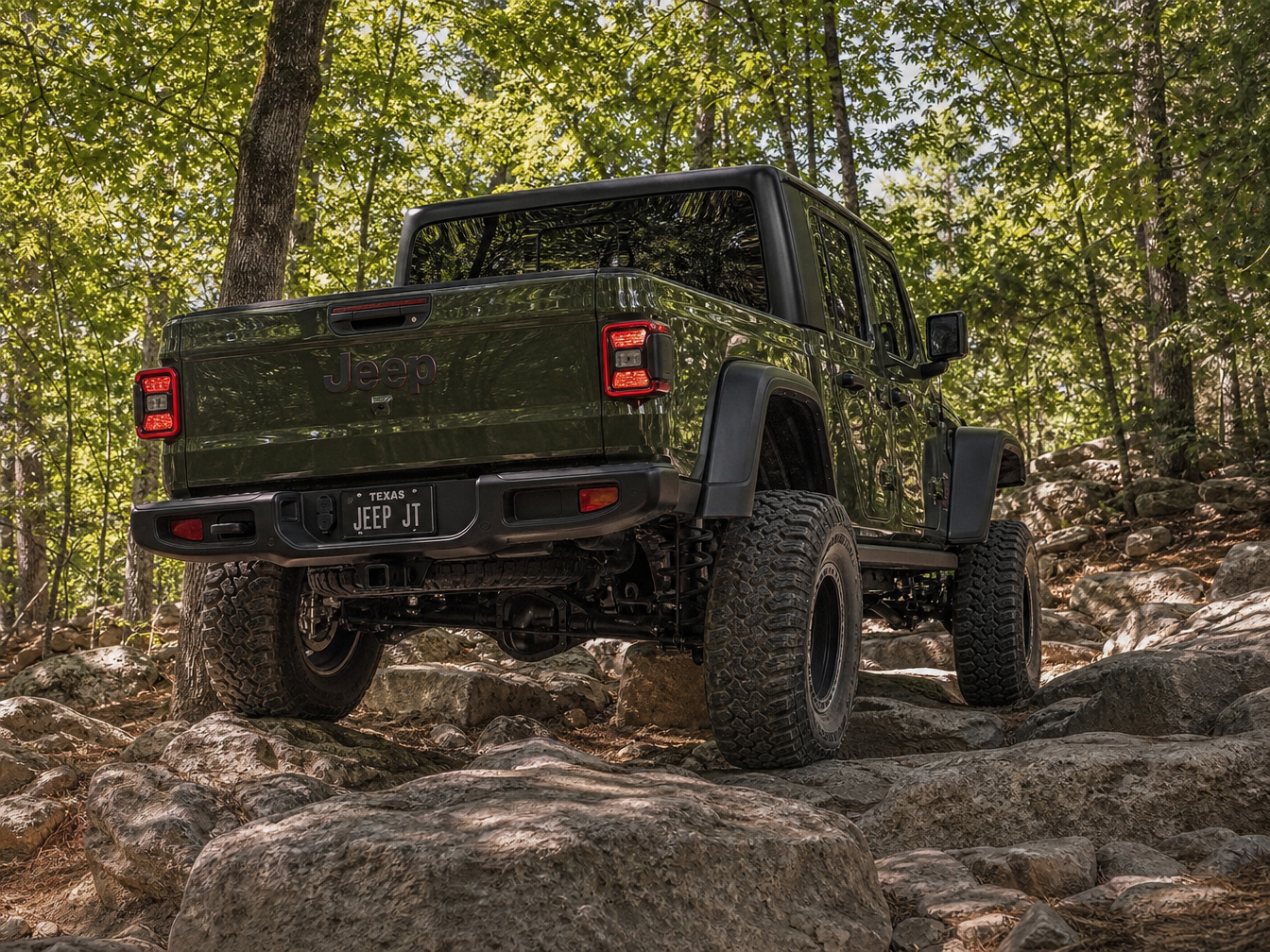
The JT runs wider factory axle tracks than the JL on upper trims, and the longer wheelbase changes how tire size and lift height interact. Here's the fitment guide by trim.
| Tire Size | Lift Required | Trims | Gearing | Notes |
|---|---|---|---|---|
| 33" (stock) | Stock ride height | Factory Rubicon, Willys, some Overland | 3.73 (Sport) or 4.10 (Rubicon) | Factory fitment on Rubicon and Willys. Daily driver without changes. |
| 35×12.5" | 2"–3.5" lift | All trims | 4.10 OK on Rubicon · 3.73 needs 4.56 regear on Sport/Overland | The sweet spot for the daily driver JT. All four seasons, highway usable. |
| 37×12.5" | 3.5"–4.5" lift | Rubicon, Mojave, Sport S (wide-track) | 4.88 recommended regardless of trim — 4.10 loses meaningfully at 37" | ADAS recal mandatory. Driveshaft angles verified against shock extended length. |
| 37×13.5" | 4"–4.5" lift | Rubicon, Mojave preferred | 4.88 required | Wider tire — check fender clearance on articulation. Wide-track axle preferred for offset. |
| 40"+ tires | 4.5"+ lift | Stage 3 / dedicated rig | 5.13:1 at 40"+ | Front driveshaft upgrade required. One-ton axle swap territory. Payload impact significant. |
EcoDiesel note: The 3.0L EcoDiesel JT has 3.73 gears across all trims — including Rubicon. The diesel's 442 lb-ft of torque partially compensates for the taller gearing at 35" tires, but the Rubicon EcoDiesel still benefits from a regear to 4.10 or 4.56 at 37"+. EcoDiesel builds also get the wide-track Dana 44 regardless of trim.
Gladiator JT Stage Roadmap — Trail to Overland to Rock
Three build tiers. The Gladiator's use case determines which path makes sense — and the truck bed changes the calculation in ways the Wrangler never presents.
Gladiator JT Lift Kits We Install
Kits we use on JT builds. All installs include 4-wheel alignment at ride height, front track bar geometry correction, and ADAS recalibration. The kit is only part of the install. The full rundown of what we install across platforms is on our lift kits and suspension page.
| Kit | Lift | Best For | Tire Capacity | Notes |
|---|---|---|---|---|
| EVO MFG 2.5" Coilover | 2.5" | Stage 1 daily / Mojave owners | 35" | Fox shocks available. Solid kit for mild builds. No regear needed at 35" on 4.10 or higher. |
| TeraFlex ST2 3.5" | 3"–3.5" | Stage 1 JT Rubicon | 35"–37" | Budget-friendly entry point with correct geometry included. ADAS recal required. |
| ReadyLIFT 4" Terrain Flex | 4" | Stage 1–2 transition | 37" | 4-arm kit with Falcon 2.1 shocks. Explicitly notes ADAS zero-point calibration required. Good highway manners. |
| BDS 4" Long Arm | 4" | Stage 2 trail / Overland | 37"–38" | Long arm geometry. Fox 2.0 Performance shocks standard. Correct for Rubicon and non-Rubicon. Driveshaft verification required. |
| Metalcloak 3.5" Gamechanger | 3.5" | Stage 2 on-trail / rock | 37" | Community-recommended build quality. Extended driveshaft required on some configurations — verify shock extended length at build spec stage. |
| EVO MFG 4.5" Stage 2 | 4.5" | Stage 2 performance | 37"–40" | Community favorite for aggressive trail JTs. No driveshaft changes required per EVO up to 6.5" — verify against shock spec. |
| Synergy 4.5" Performance | 4"–4.5" | Stage 2–3 trail | 37"–40" | Bilstein 8100 DSA shocks available. Front and rear geometry brackets keep geometry correct. Demanding proper spec and alignment. |
On cheap lift kits: The JT Gladiator community consistently documents death wobble and degraded handling from incomplete or budget lift kits — particularly those that include cam bolt caster adjustment only (no proper length control arms) and no track bar correction. We do not install kits without proper geometry correction. If a kit doesn't include it, we add it. That is why our quotes may run higher than what you see on forums — and why our Gladiators drive straight at 75 mph after the build.
Gladiator JT Parts Guide
What we use, what we recommend, and what we specifically avoid on JT Gladiator builds.
Suspension
Stage 1: EVO MFG 2.5" coilover, TeraFlex ST2, ReadyLIFT Terrain Flex 4" (4-arm). Falcon 2.1 or Fox 2.0 Performance shocks standard across Stage 1.
Stage 2: BDS long arm, EVO MFG 4.5", Synergy 4.5" Performance, Metalcloak Gamechanger. Fox 2.0 or 2.5 shocks, Bilstein 8100.
Geometry correction (track bar, control arm length, caster) is not optional at any lift height. We include it or the install doesn't happen.
Axle & Drivetrain
Regear: 4.56:1 for 35" tires, 4.88:1 for 37", 5.13:1 for 40"+. Master install kit standard on every regear. Non-Rubicon Sport/Overland: high priority before anything else.
Lockers: ARB Air Locker (front and rear), Eaton E-Locker. Factory Tru-Lok electronic lockers serviced and retained on Rubicon builds.
Driveshafts: Adams Driveshaft 1350-series, Tom Woods custom-length for Stage 2+ where shock extended length requires it.
Armor & Protection
Bumpers: Metalcloak, Poison Spyder, Warn, custom fab in-house for one-off tube configurations.
Rock Sliders: GenRight, Metalcloak, C4 Fabrication, or in-house weld-on for custom builds.
Skid Plates: Skid Row, Metalcloak full coverage, EVO full armor. Transmission, t-case, and fuel tank skids standard on Stage 2+ builds.
Overland & Power Systems
Dual battery: Redarc BCDC DC-DC charger, National Luna isolator, Blue Sea Systems fuse panels. Marine-grade tinned copper throughout.
Onboard air: ARB Twin compressor (preferred for expedition builds — 4 CFM, 33% faster inflation than single). VIAIR 400C for light-duty builds.
Winch: Warn Zeon 10-S, Warn ZEON 12, Smittybilt X2O 12K. Synthetic rope with Factor 55 FlatLink as standard.
The Gladiator bed changes the overland system architecture — more mounting options, more storage capacity, better weight distribution than a Wrangler with a cargo platform. We design electrical systems around the bed layout.
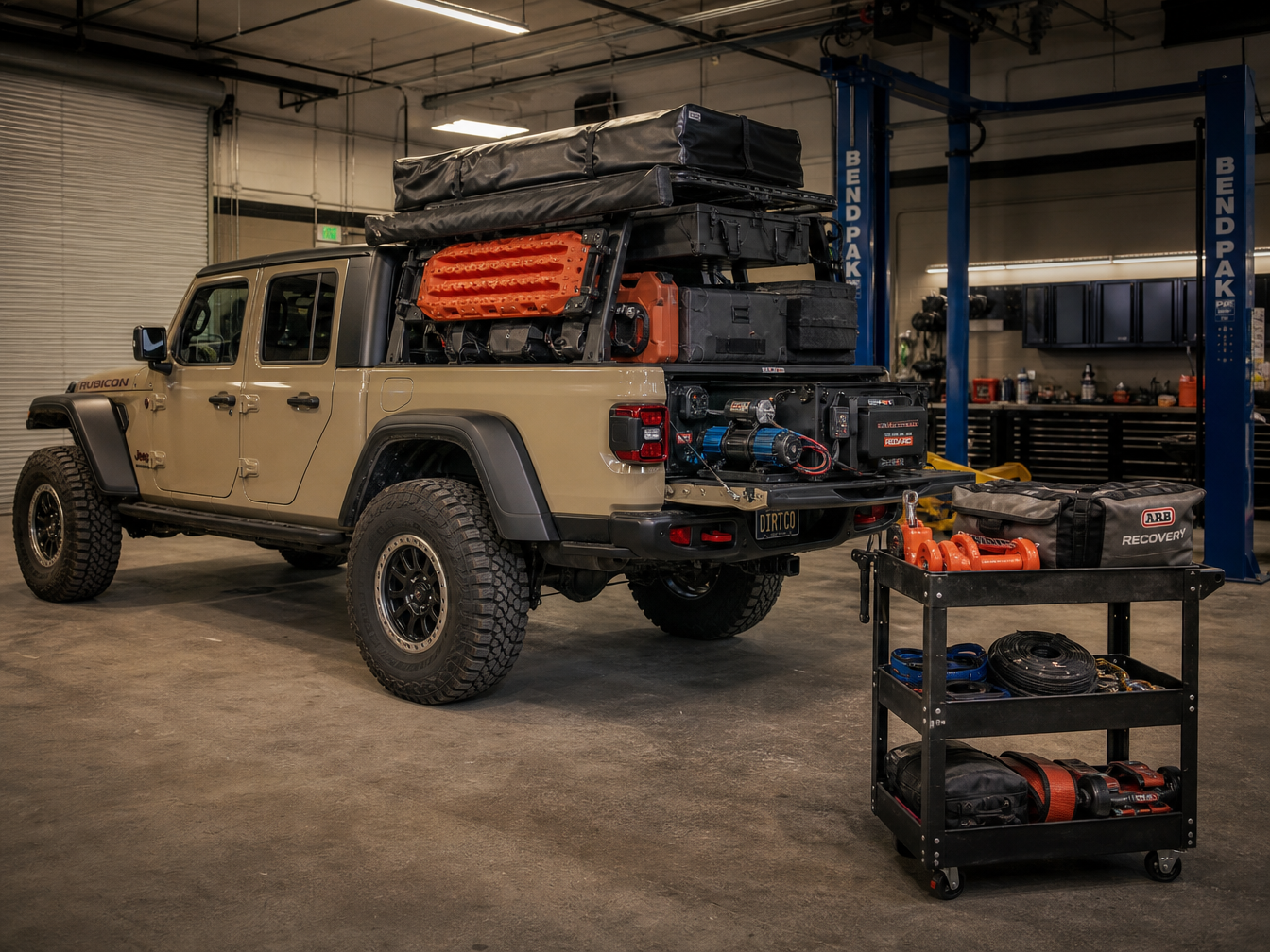
The bed changes the build conversation. The JT's 5-foot steel bed is not a limitation — it is a significant advantage for expedition builds. A Wrangler with a roof rack and rear cargo platform carries the same gear in worse positions. A Gladiator carries it lower, more accessible, and without the aerodynamic penalty of a roof load. We design overland systems around this architecture.
Gladiator JT vs Wrangler JL — Which One to Build
We build both. The question we get every week: "Should I have bought a Gladiator or a Wrangler for this build?" Here's the honest answer.
| Factor | Gladiator JT | Wrangler JL |
|---|---|---|
| Wheelbase | 137.3" — longer, less agile on tight trails | 118.4" — better breakover, tighter trail agility |
| Towing Capacity | Up to 7,700 lbs | Up to 5,000 lbs |
| Payload Capacity | Up to 1,725 lbs (Sport S Max Tow) | 1,327 lbs max |
| Cargo / Gear Carrying | 5-foot steel bed — superior gear architecture | Limited to interior + roof rack |
| Breakover Angle | Longer WB = lower breakover on rock | Better breakover — shorter between axles |
| High-Speed Desert Terrain | Longer WB is an advantage at speed | More pitching at speed over whoops |
| Highway Ride Quality | Noticeably smoother — longer WB | More road input through solid axles |
| Overland Build Suitability | First choice — bed architecture + payload | Capable but compromised cargo architecture |
| Rock Crawler Build Suitability | Longer WB limits extreme rock lines | First choice for dedicated rock crawling |
| ADAS Complexity | Same suite as JL — recal required on all lifts | Same |
| Parking / City Use | 218" long — parking challenges in Houston | 188" — more manageable |
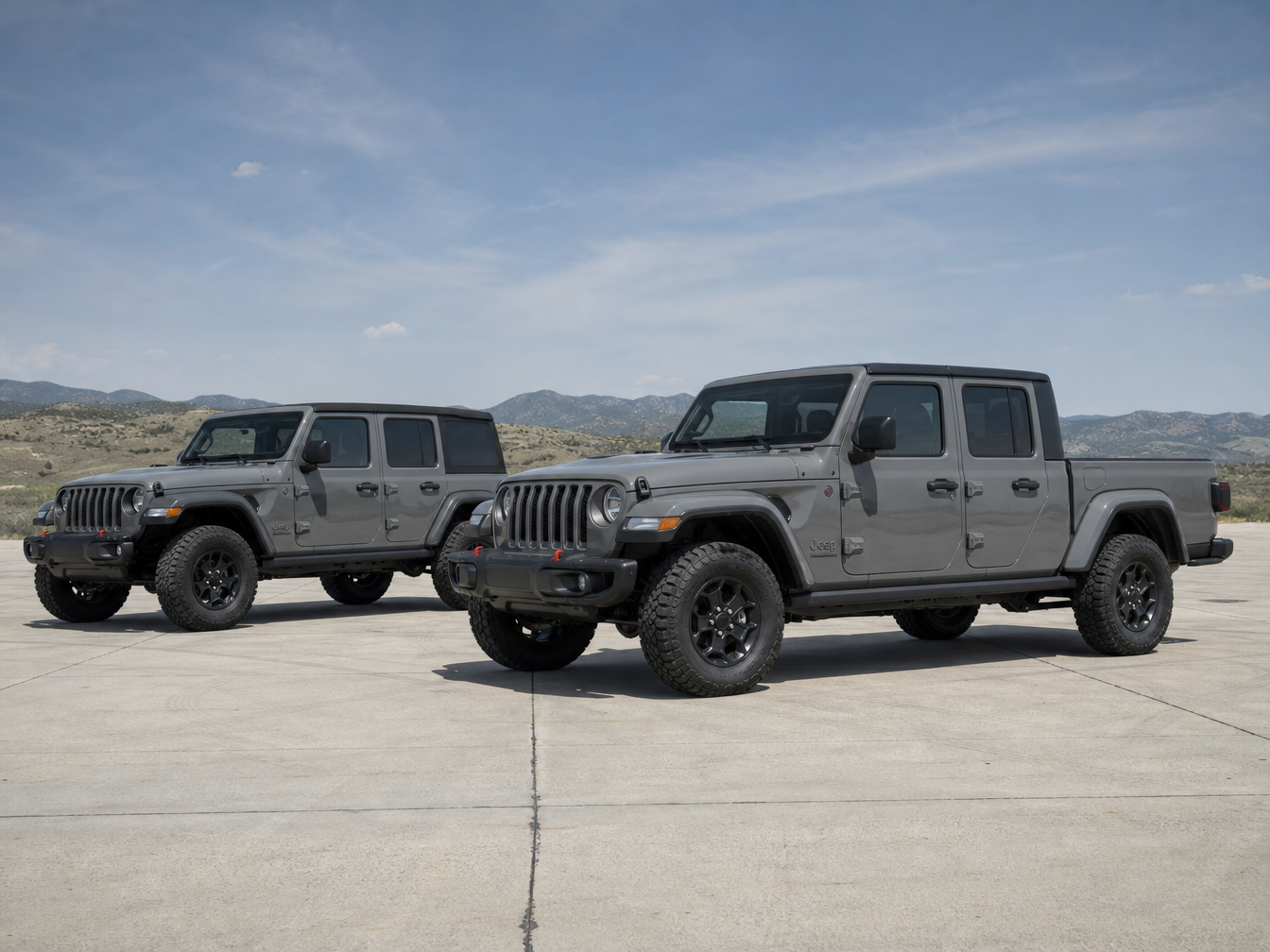
Our take: If the primary build goal is rock crawling, buy the Wrangler. If the primary build goal is overland travel, expedition capability, or using one vehicle for work and trail — buy the Gladiator. Most of our Gladiator customers bought it for the right reasons. The few who wished they'd bought a Wrangler are the ones trying to fit the Gladiator into lines designed for a 2-door TJ.
Gladiator JT Questions. Straight Answers.
Ten questions we answer every week. If you've already looked these up and have a different question, come in — bring the Gladiator.
Serving Gladiator Owners From Across Greater Houston
Summit Jeep Works builds and services Jeep Gladiator JT for owners from across the Houston metro and beyond.
Tell Us About Your Gladiator
Trim, year, current mods, and what you want to build. We respond in under 30 seconds during shop hours.
Houston, TX 77057
Sat 9am–4pm